Choose a pause, not a performance
The point of this checklist is to make an ordinary coffee break more deliberate. You do not need an elaborate morning routine, a perfect streak or a particular mushroom ingredient. You can use the same sensory prompts with ordinary coffee, decaf or another drink you enjoy.
There is no established evidence that turning mushroom coffee into a ritual makes the blend improve health. Noticing that a break feels pleasant is a valid personal experience, but it does not establish a pharmacological effect of the mushroom ingredients.
Decide what would make the pause useful today: drinking while it is still warm, stepping away from a screen, or simply making a cup you actually like. For the health-claim distinction, start with five mushroom coffee claims examined.
Before the kettle: a short preparation checklist
Set out only what your product needs. A measured instant blend, a mug and a spoon can be enough; ground coffee requires suitable brewing equipment. Read the preparation directions rather than borrowing a scoop size from a different formula.
Take a moment to consider the caffeine you have already consumed and what you plan to drink later. A mushroom label does not establish that a product is low-caffeine, and a caffeine-free additive does not change the caffeine in the coffee beneath it.
Our home preparation guide covers the practical steps if a new format is getting in the way of an easy break.
- Check the serving amount and preparation method on the actual package.
- Use a clean, dry measuring spoon and a stable, heat-safe mug.
- Read the ingredient and allergen information before trying a new formula.
- Clear a small place to put the drink down safely.
- Choose whether this is a moment for coffee, decaf or a different drink.
During preparation: pay attention to one thing
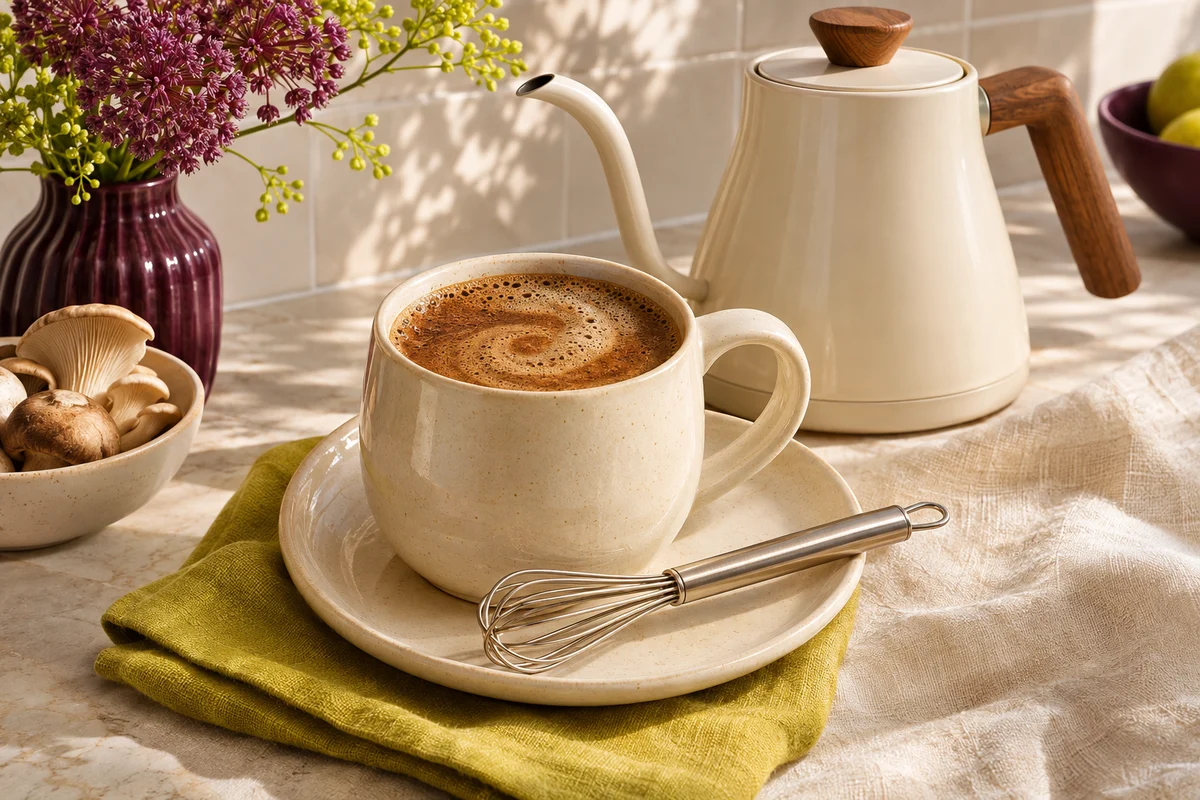
While mixing or brewing, choose a single detail: the sound of pouring, the change in color as the liquid meets the powder, or the aroma rising from the mug. You do not have to describe a special sensation or feel calmer for the exercise to count.
If you are using a frother, stop before the liquid rises near the rim. If the cup is too hot, let it cool rather than rushing to complete the routine. A mindful break should not create pressure to drink on a schedule.
Notice whether the practical setup works. A mug that is comfortable to hold and a recipe that mixes easily can matter more to enjoyment than adding another ingredient.
For the first few sips: use neutral sensory prompts
Try separating observation from judgment. 'This is bitter' or 'the powder settles' gives you something specific to adjust. 'This must be healthy because it tastes earthy' turns a flavor into an unsupported conclusion.
You can note aroma, temperature, body and aftertaste without scoring the drink or claiming expertise. Describing what you notice is more useful than trying to reproduce a reviewer's tasting language.
If you dislike the drink, you can stop or choose a different one next time. There is no evidence-based need to finish a product or repeat it for a set number of weeks to unlock promised blend benefits.
- Aroma: roasted, cocoa-like, earthy or something else?
- Temperature: comfortable, too hot, or cooler than you prefer?
- Texture: light, creamy, foamy or gritty?
- Taste: what changes if you add a little water or milk?
- Preference: would you willingly choose this again without a health claim?
Keep caffeine timing separate from the ritual
The FDA notes that too much caffeine can cause jitters, anxiety and sleep problems, and that sensitivity varies widely. A quiet setting does not cancel the caffeine in a drink.
In a controlled sleep study, a 400 mg caffeine dose disrupted sleep even when taken six hours before bedtime. The dose was much more substantial than many single servings of coffee, and the study did not test a mushroom blend. It is a reason to consider timing, not a precise prediction for your mug.
For an evening ritual, you can choose a noncaffeinated beverage rather than searching for a mushroom that supposedly offsets stimulation. Our guide to when to drink mushroom coffee approaches timing through caffeine and routine rather than a promised benefit window.
After the cup: make one useful note, then move on
If you want to improve the next cup, record one concrete detail: the serving used, the amount of liquid, or whether you liked a particular milk. Avoid turning the break into a daily symptom-scoring project or treating an ordinary good day as proof that the blend works.
When several things change at once—sleep, workload, caffeine intake, breakfast and the coffee—it is not possible to isolate the effect of mushrooms from your impression alone. Our guide to assessing coffee reviews explains the same problem in testimonials.
A repeatable ritual is optional. Missing a day does not erase progress, because this is a personal preference exercise rather than a prescribed course of treatment.
When the checklist should stop
Do not use a ritual to persuade yourself to ignore a drink that makes you feel unwell. Stop using a suspect product and seek appropriate medical advice for concerning symptoms; a coffee guide cannot diagnose the cause.
NCCIH's supplement guidance highlights medication interactions and gaps in safety research for pregnancy, breastfeeding and children. If you have a medical question about an extract blend, ask about its complete label before building it into a routine.
Keep the useful part of the ritual even if you leave out the mushroom coffee: a safe place to put a mug, a little attention to what you enjoy and permission to take a brief break.