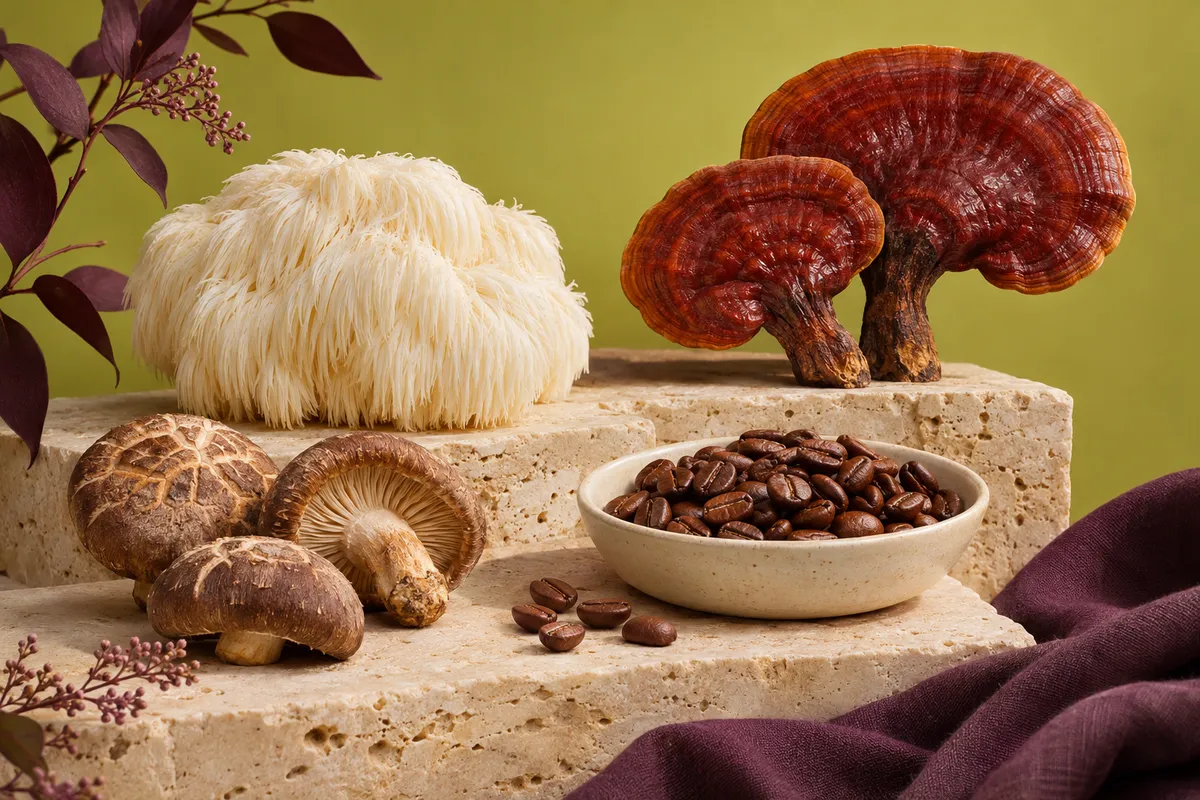
Before counting benefits, check what was studied
A coffee containing several mushroom extracts is a finished mixture. A study of a single mushroom, isolated compound or concentrated preparation does not demonstrate that the mixture produces the same outcome. Species, preparation, amount, population and duration all matter.
That distinction is easy to lose in a list of 'top benefits.' Laboratory activity, a small human ingredient trial and a well-controlled trial of the exact beverage are different kinds of evidence. Our science guide explains how to follow the chain from a citation to a claim.
The five claims below are questions to examine, not a ranking of demonstrated benefits. A product can be enjoyable without being a treatment or a nutritional necessity.
1. More energy with fewer caffeine jitters
Caffeine has a recognized alertness effect; EFSA's caffeine overview describes its stimulation of the central nervous system. That can explain feeling more awake after a caffeinated mushroom coffee without proving that the mushroom ingredients contributed.
A blend may reduce your caffeine exposure if its labeled amount, multiplied by the servings you drink, is lower than your previous intake. It may not do so if you double the powder, add espresso or drink an extra mug. The FDA emphasizes individual sensitivity; a lower-caffeine drink is not guaranteed to be jitter-free.
Practical test: write down the caffeine from the whole day before changing products. Compare that with a smaller ordinary coffee or decaf as well as the mushroom option. See our caffeine-focused coffee comparison for serving calculations.
2. Better focus or memory
Lion's mane is often the ingredient behind this claim. In a small placebo-controlled trial, 30 adults with mild cognitive impairment received lion's mane tablets or placebo for 16 weeks. The investigators reported improvement on the cognitive scale during intake; this was not a trial of a coffee blend or a study of immediate productivity in healthy adults.
The result is a reason for further investigation, not permission to promise sharper thinking from a morning mug. A label may not even disclose enough information to compare the drink's lion's mane preparation with the trial material.
Practical test: if a seller claims clinical proof, look for the exact formula, control group, participant characteristics and measured outcome. A real ingredient citation is not enough on its own.
3. Stronger immunity or disease prevention
Mushroom-related immune research is frequently detached from its context. The National Cancer Institute's mushroom overview describes research on specific preparations, including cancer-treatment settings. It does not establish that a coffee containing mushroom powder prevents infections or cancer.
A laboratory change in an immune marker is not the same as fewer illnesses or a clinically useful result. Nor does measuring beta-glucans in a package prove that the drink improves a person's health.
Practical test: ask whether the claimed outcome is something a person experiences or merely a laboratory measurement. Do not use a retail coffee in place of vaccination, treatment or other medical care.
4. Less stress and better sleep
Words such as 'adaptogenic' or 'calming' do not demonstrate that a caffeinated blend treats stress or improves sleep. Replacing a late coffee with an earlier or lower-caffeine drink is a different intervention from adding mushroom extracts.
A placebo-controlled caffeine-and-sleep study found sleep disruption when 400 mg of caffeine was taken at bedtime, three hours before or six hours before. It tested a substantial caffeine dose, not mushroom coffee, so it cannot supply a universal cutoff for every person or every lower-dose beverage.
Practical test: consider timing and total caffeine before attributing changes in sleep to the mushrooms. A simple coffee ritual can be a pleasant pause without being a treatment for anxiety or insomnia.
5. Better digestion or easier weight management
A finished blend may contain added fibers, sweeteners, creamers or oils as well as mushrooms and coffee. That makes it difficult to attribute a change in digestive comfort to a single ingredient. Claims about the whole drink need evidence about that formula, rather than a general story about gut health.
There is no established basis here for promising weight loss from brewed mushroom coffee. Replacing a sweetened drink with an unsweetened one changes what you consume, but that is not proof of a special mushroom effect. Our weight-loss research explainer separates those questions.
Practical test: inspect added sugar and the portion you prepare. If a product causes discomfort, do not assume that continuing it or increasing the dose will unlock a benefit.
What a reasonable decision looks like
Choose on taste, preparation, clearly disclosed caffeine and an acceptable ingredient list, not on a promise to fix several health concerns at once. The mushroom ingredient guide can help you identify what you are actually buying.
NCCIH notes that supplements can interact with medicines and that many have not been tested in pregnant or breastfeeding people or children. If an extract blend raises a medical question, take its full label to a qualified clinician or pharmacist. 'Natural' is not a substitute for a safety assessment.
Sources & further reading
- EFSA: Caffeine
- FDA: Spilling the Beans—How Much Caffeine Is Too Much?
- Mori et al.: Hericium erinaceus trial, primary abstract via Europe PMC (PMID 18844328)
- National Cancer Institute: Medicinal Mushrooms (PDQ), patient version
- Drake et al.: Caffeine Effects on Sleep Taken 0, 3, or 6 Hours Before Going to Bed
- NCCIH: Using Dietary Supplements Wisely