A better-informed daily ritual
Mushroom coffee.
A little more clarity.
What’s in your cup? A closer look at the ingredients, the evidence, and the pleasure of making it yours.
Start with the essentials ↗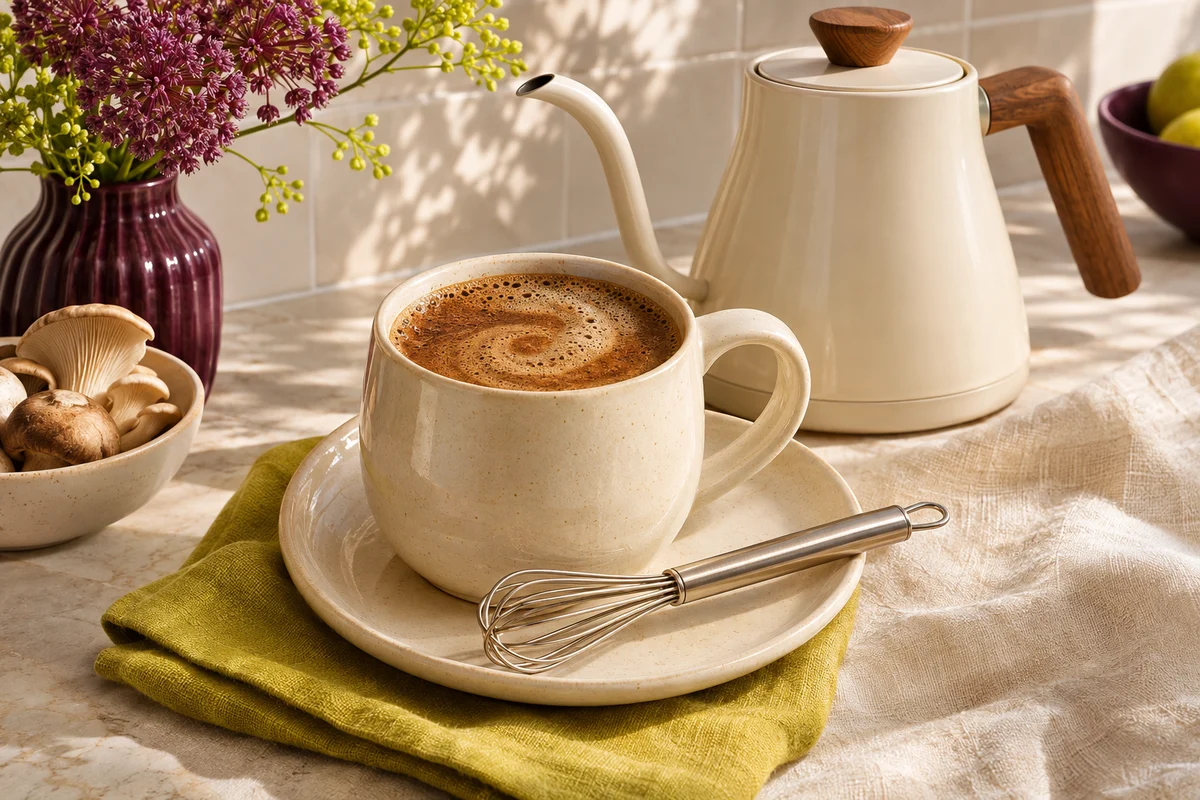
LOOK AT
YOUR CUP
Freshly mixed coffee with a small whisk, cream kettle and chartreuse cloth on ivory linen. AI-generated editorial illustration.
The daily reading
Keep exploring ↓
How to compare mushroom coffee brands
The most useful way to compare mushroom coffee brands is to examine the exact product label, preparation method and purchase terms. No universal best brand follows from a long mushroom list, and ingredient studies do not establish that a finished coffee blend improves health.
How to choose the right mushroom coffee for you
Choose mushroom coffee by its caffeine amount, ingredients, preparation method and whether you enjoy drinking it—not by promises of better memory or immunity. Benefits of finished mushroom-coffee blends remain unproven, and research on an isolated ingredient does not establish what your cup will do.
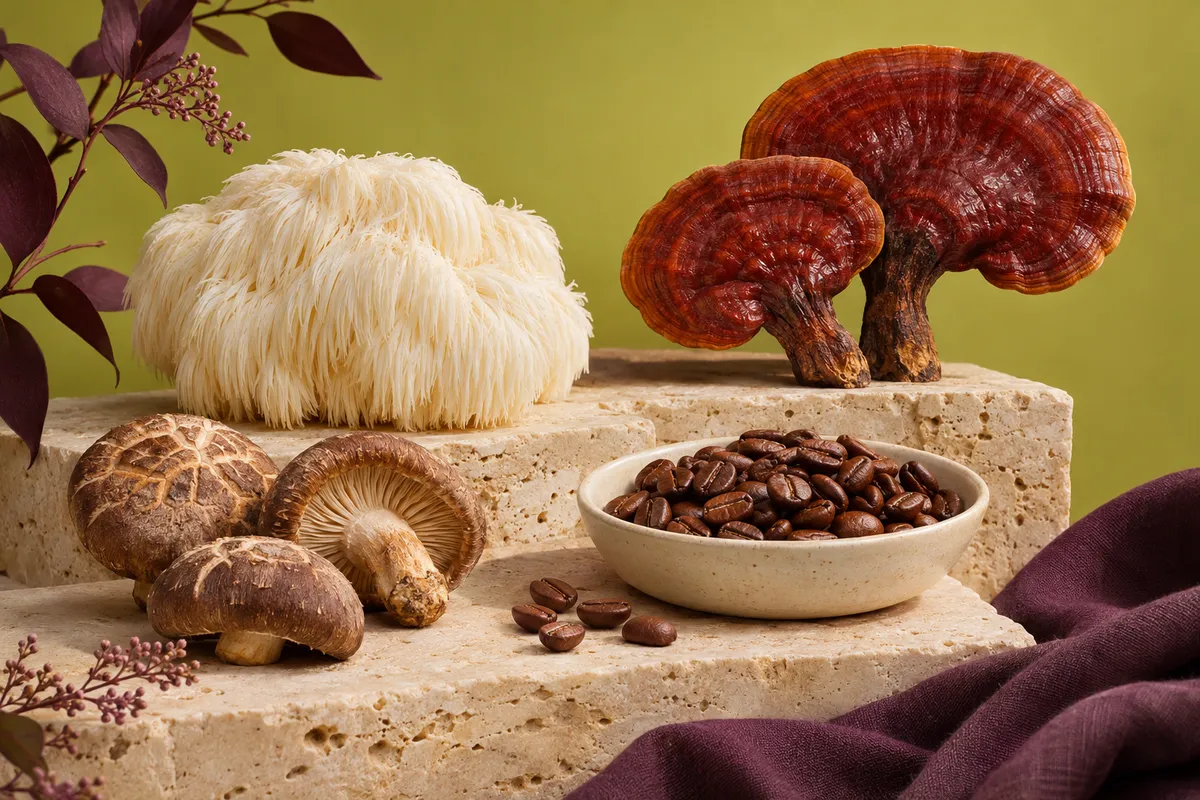
Which mushrooms are used in mushroom coffee?
Mushroom coffee labels may list lion's mane, chaga, reishi, cordyceps, turkey tail or culinary mushrooms such as shiitake. These names identify ingredients, not established benefits: research on a particular mushroom preparation cannot demonstrate that a brewed multi-ingredient coffee blend works.
Inside the blend
Meet the
mushrooms.
A familiar morning ritual. Some less familiar ingredients. Get to know what’s actually in the mix.
Explore the ingredients ↗Our editorial approach
Good questions.
Grounded answers.
Mushroom coffee comes with plenty of promises. We look at what ingredient research can tell us, what a finished blend can’t promise, and where the evidence still falls short.
Stay curious.
Notes for your next cupWhen is the best time to drink mushroom coffee?
There is no established best time to drink mushroom coffee for special mushroom-related benefits. If your blend contains caffeine, choose a time that protects your sleep and fits your sensitivity, with earlier in your waking day a practical starting point.
The science behind mushroom coffee, read carefully
Research on a mushroom ingredient does not establish that mushroom coffee produces the same effect. The efficacy of finished blends remains unproven, so the useful question is whether a study actually matches the drink, dose, people and outcome in a product claim.
Five mushroom coffee health claims, examined
Mushroom coffee has not been established as a way to improve immunity, memory, stress, digestion or body weight. Some blends supply less caffeine than the drink they replace, but that depends on the label and serving size, not on a proven protective effect of mushrooms.
DIY mushroom coffee recipes for a better-tasting cup
The simplest DIY mushroom coffee uses a commercial blend prepared according to its label, with water, milk or ice adjusted for taste. These recipes change the flavor and texture of a drink; they do not establish health benefits or turn ingredient research into proof about the finished cup.
Does mushroom coffee belong in your daily wellness routine?
Drinking mushroom coffee every day has not been shown to deliver the broad wellness benefits often promised in advertising. Treat it as an optional beverage choice, with attention to caffeine, ingredients and personal suitability, rather than a daily treatment or health requirement.
How to make mushroom coffee at home
To make mushroom coffee, first check whether your product is an instant blend, ground coffee or a mushroom-only add-in. Mix an instant product as its label directs, brew grounds with suitable equipment, or prepare your usual coffee before adding a powder intended for that use.