Identify what is in the bag
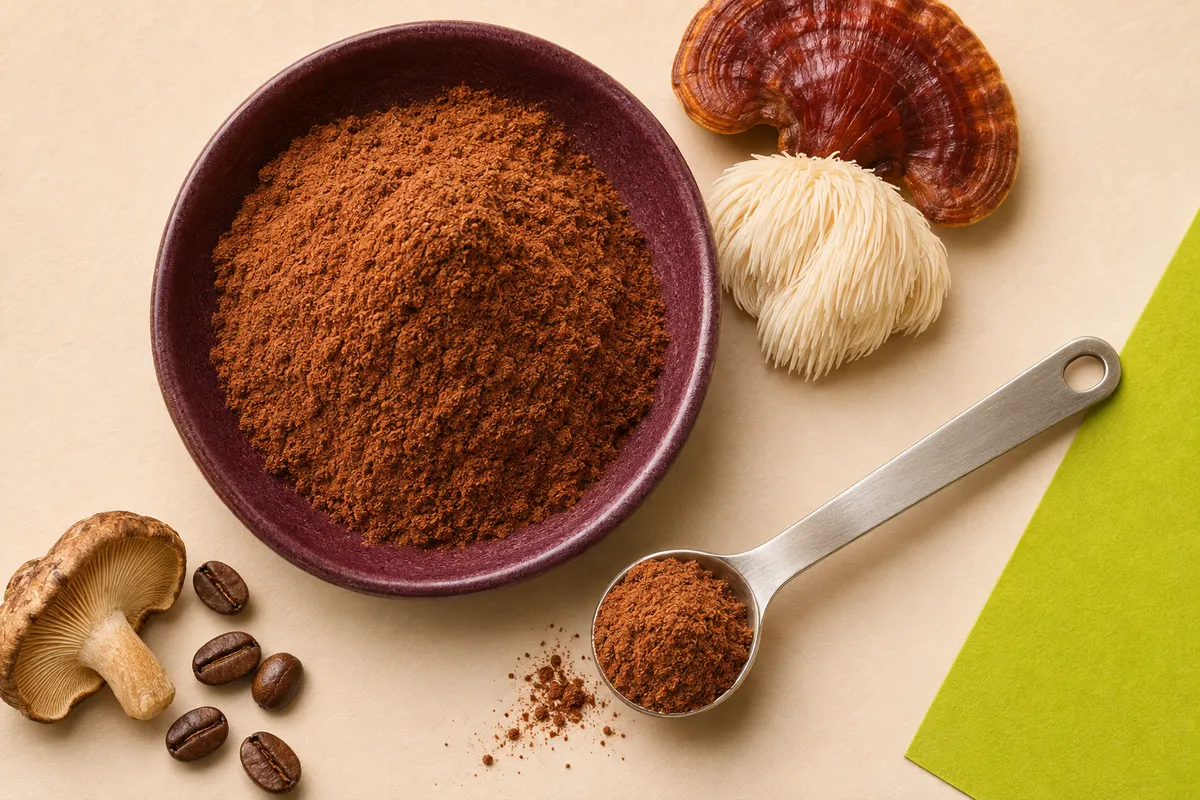
There is no universal mushroom-coffee ratio because the products are not standardized recipes. An instant formula may include soluble coffee, extracts and a creamer. A ground-coffee product needs a brewing step. A mushroom-only powder may contain no coffee and no caffeine until you add it to another drink.
Use the package's stated serving weight, liquid quantity and preparation instructions as your starting point. Do not substitute a tablespoon for a supplied scoop unless the label gives that equivalent. A small kitchen scale is helpful when a gram weight is provided.
If the format or directions are unclear, ask the manufacturer before using the product in an espresso machine or coffee maker. Our ingredient guide explains the differences between milled powders and extracts; neither term alone guarantees that a product dissolves.
- Instant blend: mug, spoon or small whisk, and the liquid specified on the package.
- Ground coffee blend: a brewer and filter appropriate to the labeled product.
- Add-in powder: a separately prepared drink plus the measuring tool specified on the label.
- Optional: milk or a suitable alternative, chosen after checking the blend's existing ingredients.
A simple method for an instant blend
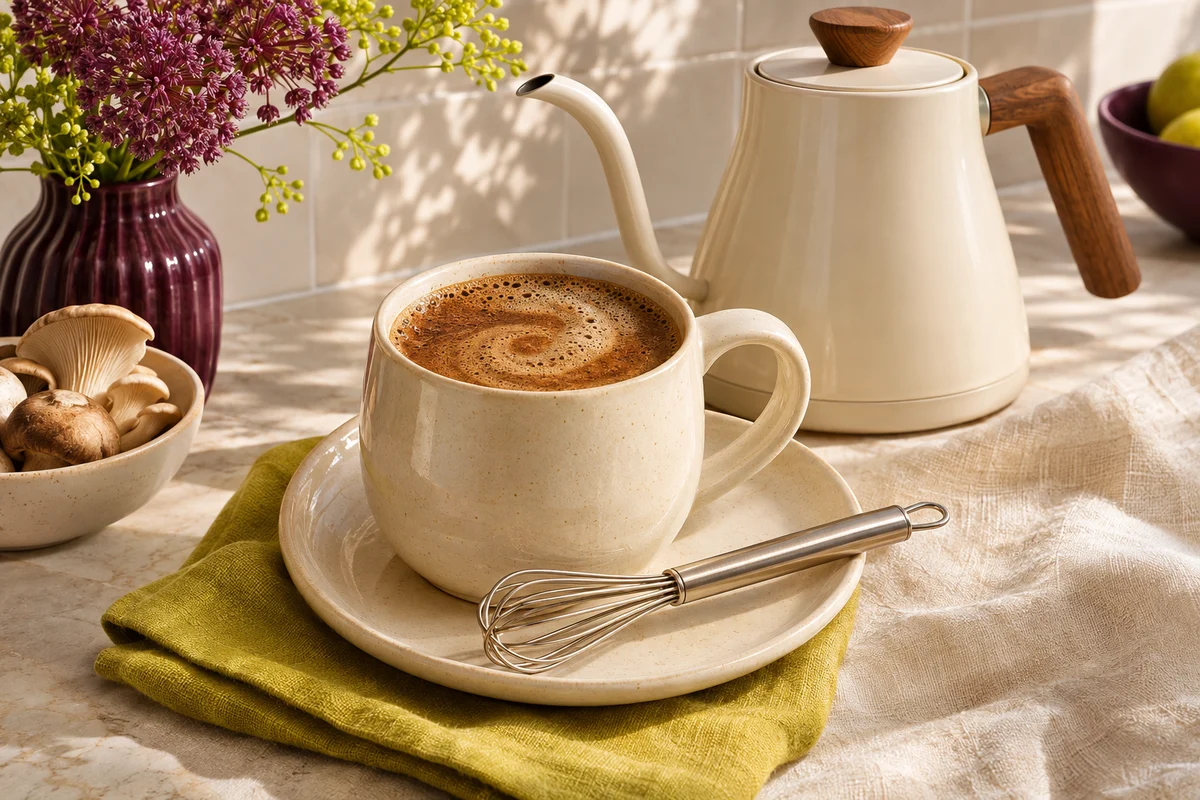
Measure the label serving into a clean mug. Add a small portion of the recommended hot liquid and stir or whisk until the powder is evenly wet. Add the remaining liquid gradually, then stir again. This small-slurry approach is a practical way to tackle dry pockets; it is not a method for increasing health effects.
Follow any temperature instructions on the package and let the drink cool to a comfortable drinking temperature. There is no single temperature that can be claimed to preserve the health benefits of every commercial mushroom coffee. Solubility, composition and preparation instructions vary.
Taste before adding anything. If it is too concentrated, add more water or milk without adding more powder. Dilution changes the strength of flavor, but it does not remove the caffeine or other ingredients already in your mug.
How to brew a ground-coffee blend
Use a product explicitly intended for your brewing method and follow its starting dose. For a filter brewer, use the appropriate filter and water quantity. For a French press, use grounds intended for that preparation and separate the brewed drink from the grounds as directed.
Do not assume a fine instant blend belongs in a filter basket, or that a mushroom supplement can be added to an espresso portafilter without affecting flow. When compatibility is uncertain, prepare ordinary coffee separately and use only an add-in whose directions permit that use.
If the cup tastes too weak or bitter, change one brewing variable at a time within the manufacturer's guidance: grind where applicable, brew time or water quantity. Adding extra mushroom powder is not the same as improving coffee extraction. Our coffee comparison guide can help you decide whether you want a blend at all.
Use a mushroom-only powder without doubling the formula
Prepare the base drink first, then add the label-directed amount if the powder is meant for beverages. Do not stack a mushroom-only supplement on top of a multi-mushroom coffee simply because both use small scoops. The full ingredient list and total amount matter.
A caffeine-free add-in does not make caffeinated coffee caffeine-free. Likewise, adding espresso to a low-caffeine blend changes the drink you are making. The FDA's caffeine page advises considering caffeine from all sources and notes that people differ in sensitivity.
Preparation cannot establish a health benefit. Brewing a drink hotter, whisking longer or adding fat does not demonstrate that the finished coffee improves cognition or immunity.
Make an iced cup without a layer of dry powder
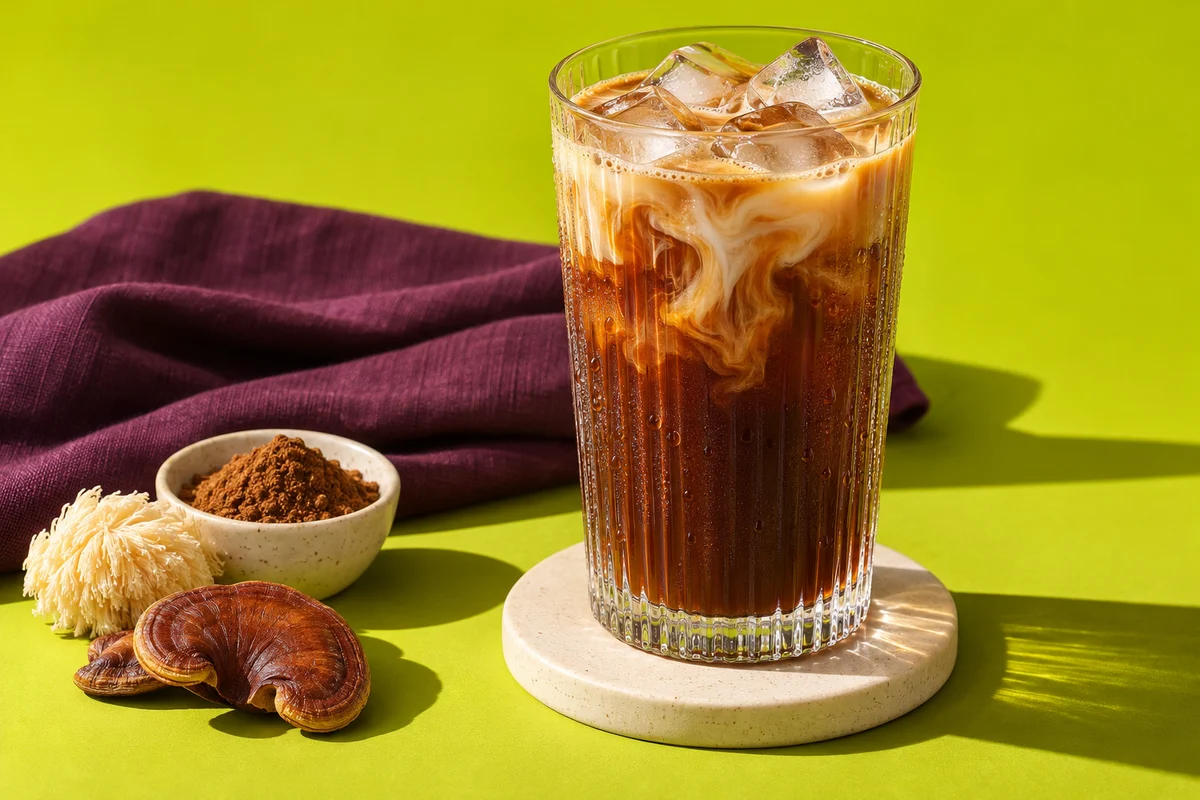
For a product intended for hot mixing, dissolve or disperse the measured serving in a small amount of the recommended hot liquid first. Then add cold water or milk and pour over ice in a heat-safe container. Keep the total liquid in mind so melting ice does not leave the flavor much weaker than you want.
If the product is labeled for cold mixing, follow those instructions instead. A handheld frother can help disperse some blends, but it cannot make every insoluble particle disappear. Stir again if a label-consistent drink settles; do not automatically add another serving.
For variations that change flavor rather than promise wellness effects, explore our DIY mushroom coffee recipes.
Troubleshoot one thing at a time
Clumps: wet the powder gradually and break up dry pockets with a spoon. Check that the bag has been stored closed according to its instructions and that the measuring tool is dry.
Grit: some formulas contain material that disperses rather than fully dissolves. Use the specified method, stir before drinking, or choose a different format next time. Filtering a blend may remove material; you cannot assume the resulting ingredient dose stays the same.
Bitterness or an earthy taste: try a little more liquid, a different milk or less added sweetener if it is masking the coffee in a way you dislike. Keep changes separate so you can tell what improved the cup. You do not need to force yourself to enjoy a product because of a health claim.
Keep preparation separate from safety advice
Read allergen information and check for other added extracts before your first cup. NCCIH cautions that supplements can interact with medicines and may not have been studied in pregnancy, breastfeeding or children. If that applies to your situation, ask a qualified clinician about the exact formula rather than assuming a coffee format makes it suitable.
A successful home cup is one you can prepare consistently and enjoy. Record the serving weight, liquid amount and additions that work for you; use the buying checklist when you replace the bag. No special brewing ritual turns unproven blend efficacy into a demonstrated health effect.