Does Mushroom Coffee Really Work? Questions Answered

Mushroom coffee is marketed as a healthier alternative to regular coffee, offering lower caffeine and potential wellness perks from medicinal mushrooms like Lion’s Mane, Reishi, Chaga, and Cordyceps. But does it live up to the hype? Here’s what you need to know:
- Caffeine Content: Mushroom coffee typically contains 40–60 mg of caffeine per cup, compared to 95 mg in regular coffee, promising a smoother energy boost without jitters or crashes.
- Health Claims: Brands suggest benefits like improved focus, reduced stress, and immune support. However, most studies involve higher doses of concentrated mushroom extracts, not the smaller amounts in coffee blends.
- Cost: Mushroom coffee costs roughly $20–$45 per container, about twice as much as regular coffee.
- Taste: Similar to coffee but with subtle earthy or nutty notes. Quality varies by brand.
Bottom Line: While mushroom coffee may appeal to those reducing caffeine intake or exploring wellness trends, its health claims lack strong evidence. To save money, consider adding mushroom extract powder to your regular coffee instead.
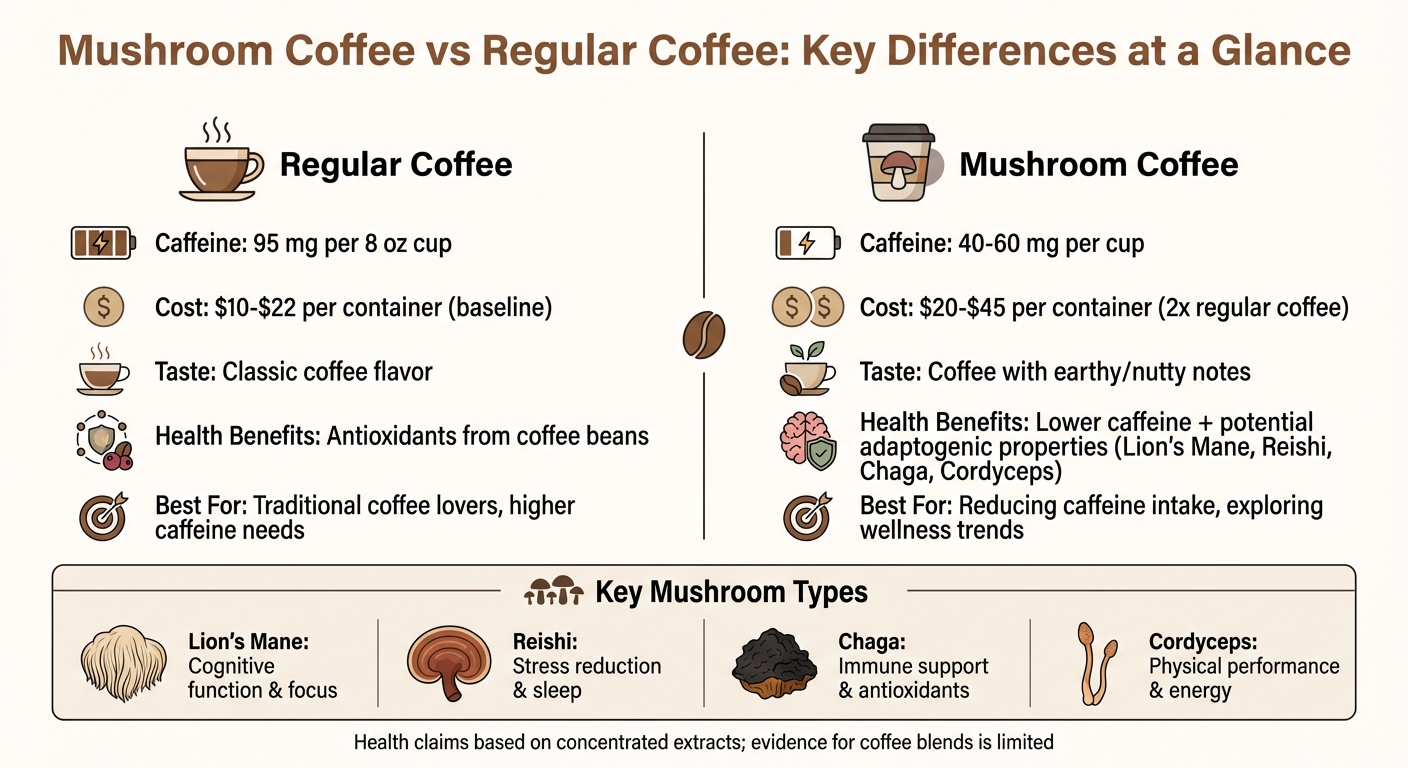
Mushroom Coffee vs Regular Coffee: Caffeine, Cost, and Health Benefits Comparison
VERIFY: Fact-checking the benefits of mushroom coffee
sbb-itb-777001b
What Is Mushroom Coffee and How Does It Work?
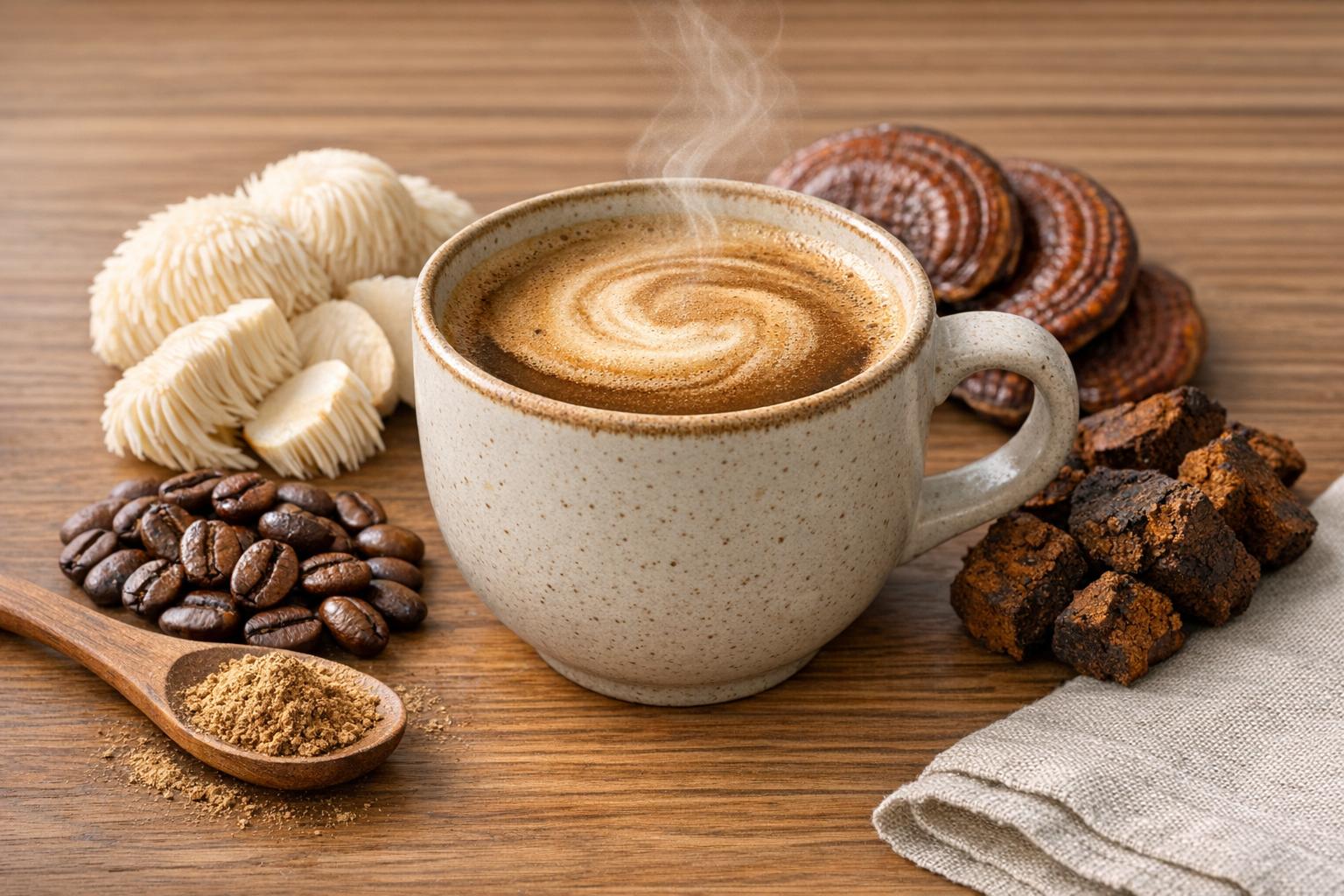
Mushroom coffee is a mix of traditional coffee beans and powdered extracts from medicinal mushrooms. These mushrooms, long used in traditional Chinese medicine, are now making their way into modern wellness routines.
The creation of mushroom coffee involves a dual-extraction process using both water and alcohol. This method isolates beneficial compounds like polysaccharides and triterpenoids. Beth Czerwony, a Registered Dietitian at Cleveland Clinic, explains:
The mushrooms undergo drying and dual-extraction to concentrate beneficial compounds, which then get blended into regular coffee.
Many of these mushrooms are considered adaptogens – natural substances that help the body handle various stressors by regulating hormones like cortisol. Their bioactive compounds work in different ways: some promote nerve growth for brain health, others boost cellular energy production, and some interact with immune cells through beta-glucans. Let’s dive into the specific mushrooms commonly found in these blends.
Types of Mushrooms in Mushroom Coffee
Several mushroom varieties are frequently included in mushroom coffee blends, each offering distinct benefits:
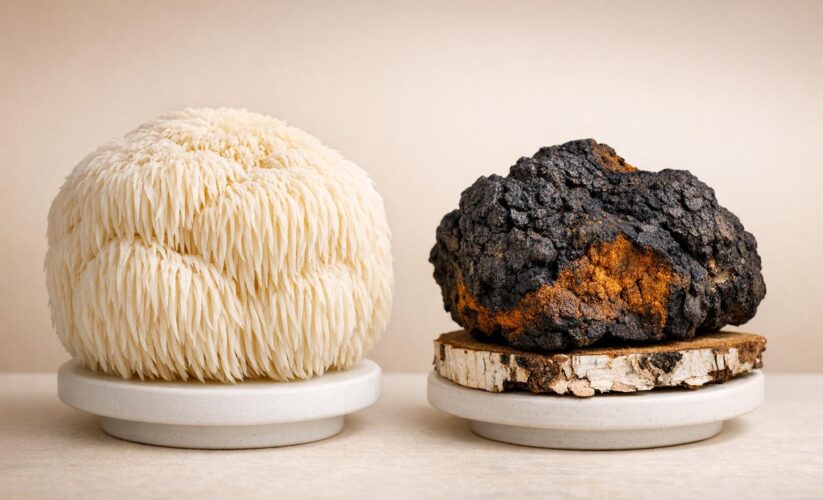
- Lion’s Mane (Hericium erinaceus): Known for enhancing cognitive function, focus, and memory, thanks to compounds like hericenones and erinacines that stimulate nerve growth factor. A 2023 study found that participants taking 1.8 grams of Lion’s Mane daily for 28 days reported reduced stress levels.
- Reishi (Ganoderma lucidum): Valued for its calming effects, Reishi helps lower cortisol levels, promoting relaxation and better sleep.
- Chaga (Inonotus obliquus): Packed with antioxidants and beta-glucans, Chaga supports immune health and reduces inflammation. However, its high oxalate content can pose risks; one case report linked consuming 10–15 grams daily for three months to kidney injury.
- Cordyceps: Known for boosting physical performance by enhancing cellular ATP production and improving oxygen use during exercise. A study showed that taking 4 grams daily for three weeks improved VO2 max in recreationally active adults.
Some blends also include Turkey Tail and King Trumpet mushrooms for added benefits like gut health and antioxidant support. When choosing a product, experts suggest looking for at least 500 milligrams of mushroom extract per serving and ensuring the extract comes from the fruiting body rather than mycelium grown on grain.
How Mushroom Coffee Differs from Regular Coffee
One of the key differences between mushroom coffee and regular coffee is the caffeine content. While an 8-ounce cup of regular coffee contains about 95 milligrams of caffeine, mushroom coffee typically provides a more moderate 40 to 60 milligrams. This reduced caffeine level delivers a steady energy boost without the jitters or the sharp crash that often follows.
In terms of taste, mushroom coffee is quite similar to regular coffee, with just a hint of earthy or nutty flavor from the mushroom extracts.
Interestingly, a study found that coffee blended with extracts from Cordyceps, Chaga, and Phellinus had higher levels of polyphenol antioxidants and beta-glucans compared to standard coffee. However, this nutritional upgrade comes with a higher price tag – mushroom coffee often costs about twice as much as regular coffee, ranging from $20 to $45 per container.
Health Claims of Mushroom Coffee: What Does the Science Say?
The research on concentrated mushroom supplements doesn’t directly translate to mushroom coffee. Why? The doses and processing methods differ significantly. Studies often use highly concentrated extracts in much larger amounts than what you’d find in a typical cup of mushroom coffee. Plus, experts question whether the beneficial compounds can even survive the high-heat processing involved in making coffee. Let’s break down how these compounds might affect specific health areas.
Cognitive Function and Mental Clarity
Lion’s Mane is often highlighted for its potential brain-boosting properties. Compounds like hericenones and erinacines found in Lion’s Mane may cross the blood-brain barrier, promoting nerve growth. Research on daily doses of 1.8 to 3 grams has shown improvements in cognitive performance and reduced stress. However, these benefits tend to fade once supplementation stops [10, 11, 13, 15].
Here’s the catch: a standard cup of mushroom coffee contains far less of these active compounds. And there’s no guarantee they remain effective after the coffee-making process. As Harvard Health Publishing notes:
There is no guarantee that any health benefits will be retained after the mushrooms are processed and blended into coffee drinks.
While the potential for cognitive benefits is intriguing, claims about stress reduction deserve further examination.
Stress and Anxiety Reduction
Reishi and Cordyceps mushrooms are thought to help with stress by balancing cortisol levels and supporting the hypothalamic-pituitary-adrenal (HPA) axis. Maggie Moon, MS, RD, explains:
Mushrooms don’t act like stimulants. Instead, certain species may support cellular energy, oxygen use, and stress resilience, which can help people feel more balanced compared to coffee alone.
However, there’s a lack of human clinical trials specifically focused on mushroom coffee. Many brands also add other adaptogens like Ashwagandha or L-theanine, making it tough to pinpoint whether the mushrooms themselves are responsible for any perceived benefits. Experts suggest that any noticeable effects might require consistent use over 2 to 4 weeks.
Immune System and Inflammation Support
Mushroom coffee is also marketed for its immune-boosting properties. Mushrooms like Chaga and Turkey Tail contain beta-glucans, which can activate immune cells. Since about 70% of the immune system is located in the gut, the prebiotic properties of mushrooms might play a role in enhancing immunity.
That said, processing can reduce the potency of these compounds. For instance, one study found that the beta-glucan content in Cordyceps dropped from 3.79% in its raw form to 2.03% after being processed into coffee.
All in all, while individual mushroom extracts show promise in scientific studies, the evidence for mushroom coffee as a finished product is limited. Most claims are based on research using much higher doses than what’s typically found in a cup.
What to Consider Before Trying Mushroom Coffee
Cost Compared to Regular Coffee
Mushroom coffee comes with a noticeably higher price tag than regular coffee. On average, a single-serving pod can cost at least twice as much as a standard coffee pod. For instance, a 12 oz bag of Earth & Star Hazelnut Mushroom Coffee is more than double the price of Jim’s Organic Hazelnut Ground Coffee. Other brands, like Laird Superfood, charge around $20 for a 12 oz bag, while Everyday Dose prices an 8.8 oz container at $40.
This price difference naturally prompts the question: is it worth the splurge? Beth Czerwony, a Registered Dietitian at Cleveland Clinic, suggests a simpler and more economical alternative:
You’d probably be better off incorporating whole mushrooms into your diet, rather than sipping special (and pricey) coffee.
For those curious but hesitant to commit to the cost, starting with mushroom extract powder and adding it to your regular coffee might be a more affordable way to experiment. If reducing caffeine intake is your goal, mushroom coffee could justify the investment, as it contains only 50 to 100 mg of caffeine per cup compared to the 95 to 200 mg found in regular coffee. Beyond cost, it’s also worth thinking about brewing and taste preferences.
Taste and Brewing Methods
Once the cost is accounted for, the next thing to consider is the taste and how you’ll prepare it. High-quality mushroom coffee is often described as tasting like regular coffee but with subtle hints of earthy, nutty, or woody flavors. It’s typically smoother and less acidic than traditional coffee. However, lower-quality products can have less appealing flavors.
Mushroom coffee grounds can be brewed using traditional methods like a French press, pour-over, or drip coffee machine. Instant varieties only require hot water. For the best flavor, keep your water temperature between 175°F and 185°F – boiling water can make the coffee bitter, while cooler water may leave the powder gritty and undissolved.
If the flavor feels too earthy for your liking, simple tweaks can improve it. Adding a pinch of sea salt can cut bitterness, while cinnamon adds warmth and a touch of natural sweetness. You could also blend in healthy fats like MCT oil or grass-fed butter to balance the flavor and provide long-lasting energy. For a creamier texture, try using a milk frother or blending the coffee for 10 to 15 seconds.
Recommended Dosage and Frequency
Once you’ve perfected your brew, it’s essential to stick to recommended dosages. For most healthy adults, one to two cups per day is enough. Most blends include about 1.5 to 3 grams of mushroom extract per serving, aligning with dosage guidelines for functional mushrooms. Consistency is key, as the benefits of functional mushrooms build over time.
However, it’s crucial to consult your doctor before adding mushroom coffee to your routine, especially if you take medications like blood thinners, blood pressure drugs, or immunosuppressants, as certain mushrooms can interact with these treatments. If you have kidney issues, steer clear of Chaga-heavy blends, as their high oxalate content may lead to kidney damage when consumed in large amounts (4 to 15 grams daily). Keeping these factors in mind will help you decide if mushroom coffee is a good fit for your lifestyle and wellness goals.
Conclusion: Is Mushroom Coffee Worth It?
Mushroom coffee offers an option for those looking to cut back on caffeine while still enjoying their daily coffee ritual. It provides a milder energy boost and is less likely to cause jitters or crashes, making it a potential choice for people sensitive to caffeine’s effects.
However, the health claims surrounding mushroom coffee – like improved cognitive function, reduced stress, and enhanced immune support – are still under investigation. Most research so far has focused on isolated mushroom extracts in controlled lab or animal studies, rather than the coffee blends consumers typically drink. Current evidence on its effects in humans remains limited, and any noticeable benefits often require consistent use over time.
Although mushroom coffee tends to be pricier, it may still attract those curious about its potential perks. Beth Czerwony, a Registered Dietitian at Cleveland Clinic, suggests:
You’d probably be better off incorporating whole mushrooms into your diet, rather than sipping special (and pricey) coffee.
Whole mushrooms provide additional fiber and nutrients that can be lost during the processing required for coffee blends.
If you’re curious about trying mushroom coffee, a good starting point might be adding a small amount of mushroom extract powder to your regular coffee. This allows you to experiment without committing to a full purchase. And as always, if you have any health concerns or are on medication, it’s wise to check with your doctor before making any changes to your routine.
FAQs
How much mushroom extract is actually in a cup?
A standard serving of mushroom coffee typically includes around 45 mg of mushroom extract per tablespoon, equating to approximately 7.3 grams of the product. However, some blends – especially those sold on specific online platforms – can offer as much as 500 mg of mushroom extract per cup, depending on the brand and its unique formulation.
How long does it take to notice any effects?
Most people start to feel the effects of mushroom coffee within 15 to 30 minutes. The full range of benefits – like enhanced focus and mental clarity – often peaks around 1 to 2 hours after consumption. However, some sources mention that initial improvements in concentration may kick in as early as 20 to 30 minutes. Keep in mind, results can differ based on individual factors like metabolism or tolerance.
Who should avoid mushroom coffee?
Mushroom coffee might not be the best choice for everyone. It’s advised to avoid it if you have autoimmune disorders, low blood pressure, kidney problems, or sensitivities to mushrooms or grains. Pregnant individuals should also steer clear. If you’re unsure whether it’s right for you, it’s a good idea to consult a healthcare professional before giving it a try.
Related Blog Posts
- 7 Health Benefits of Mushroom Coffee for Daily Wellness
- Mushroom Coffee vs Regular Coffee: Which Is Better?
- 10 Best Mushroom Coffee Brands in 2026: Expert Review
- Reducing Caffeine Jitters: How Mushroom Coffee Helps