Mushroom Coffee Checklist: What to Look for When Buying

Mushroom coffee blends coffee with medicinal mushrooms like Lion’s Mane and Reishi, offering benefits like steady energy and focus without caffeine crashes. But not all products deliver on their promises. Here’s what to check:
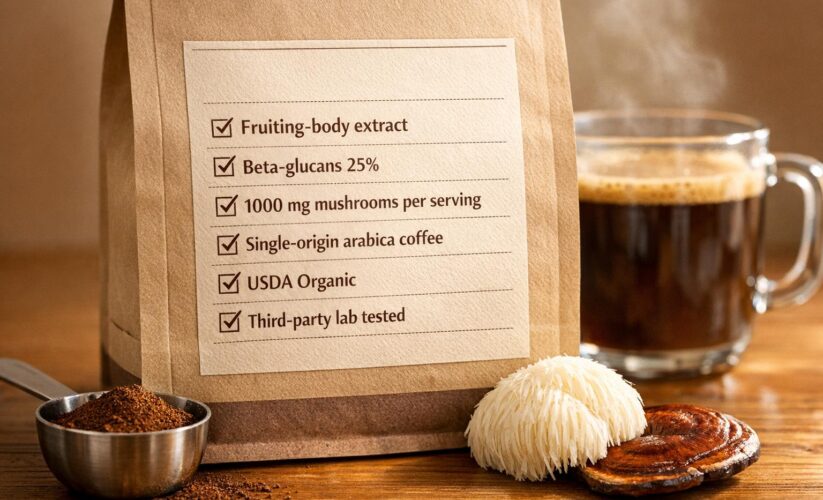
- Fruiting Body Extracts: Look for "100% fruiting body" on the label; avoid mycelium on grain, which is mostly starch with fewer active compounds.
- Beta-Glucan Content: High-quality extracts should list at least 20-25% beta-glucans. Products without this info might lack effective doses.
- Dosage: Ensure at least 500–1,000 mg of mushroom extract per serving for real benefits.
- Coffee Quality: Opt for 100% Arabica beans for smoother taste and lower acidity.
- Certifications: Choose USDA Organic or EU Organic products to avoid pesticides and heavy metals.
- Third-Party Testing: Look for batch-specific Certificates of Analysis (COAs) for purity and potency.
- Price: Expect $1.20–$2.00 per serving. Cheaper options may use fillers or low-quality mushrooms.
how to choose a mushroom coffee
sbb-itb-777001b
Key Ingredients to Look For
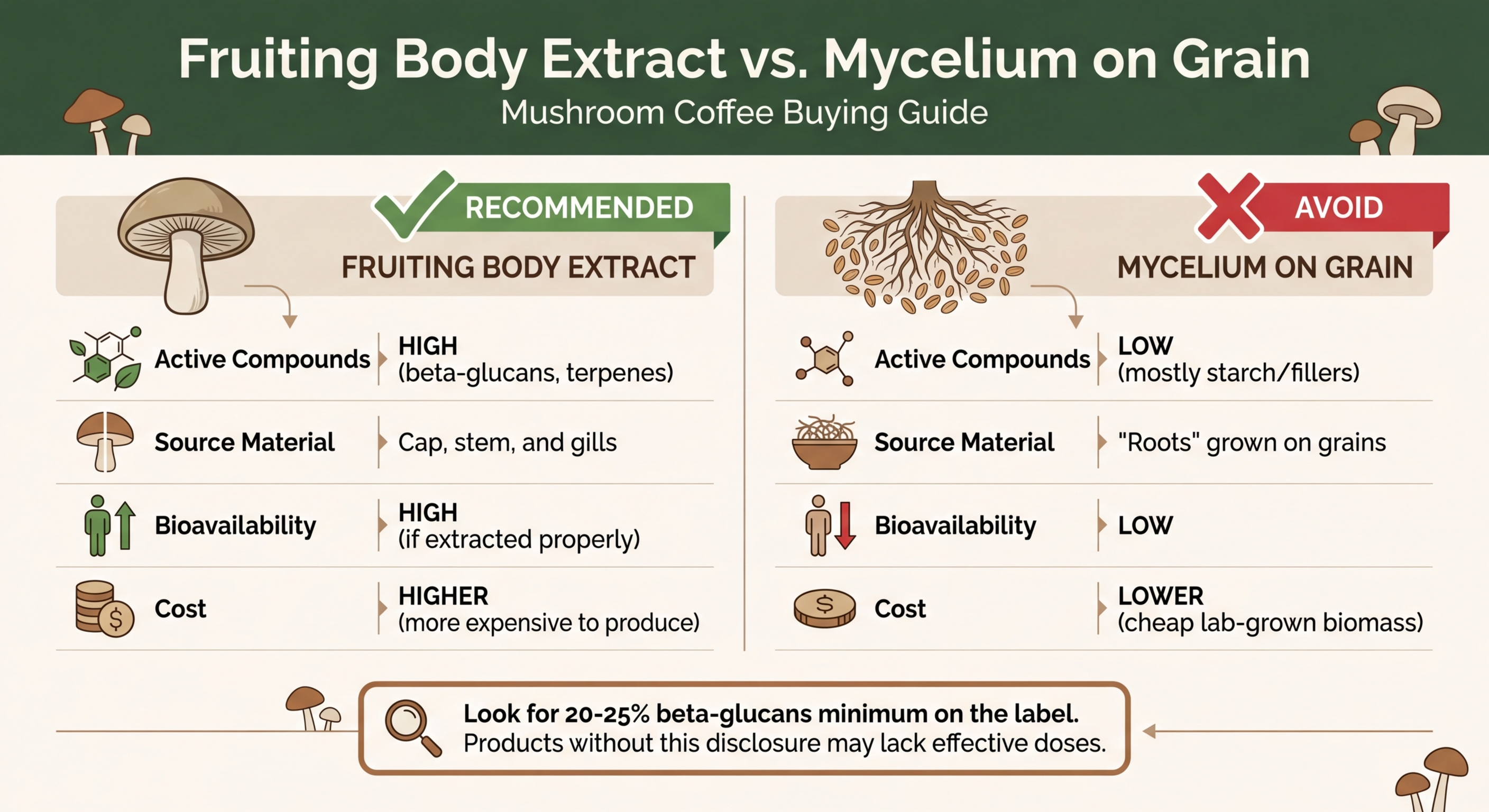
Fruiting Body vs Mycelium Mushroom Extract Comparison
The benefits of mushroom coffee come down to three main factors: high-quality mushroom extracts, the right types of medicinal mushrooms, and a well-chosen coffee base. Knowing what to look for in these ingredients can help you pick a product that delivers real benefits instead of falling short.
Fruiting Body Extracts vs. Mycelium
When shopping for mushroom coffee, always check for "100% fruiting body extract" on the label. The fruiting body – what we typically recognize as the cap and stem of a mushroom – contains the highest levels of beta-glucans, which are the compounds linked to health benefits. Some brands cut corners by using mycelium grown on grains like rice, oats, or corn. These products often end up being high in starch and low in the active compounds you’re looking for.
Why does this matter? Mushroom cell walls are made of chitin, which humans can’t digest. Through hot water extraction, this chitin is broken down, allowing beta-glucans to become bioavailable. Without proper extraction, the beta-glucans remain locked away and useless to your body.
"Fruiting bodies contain more active compounds and fewer starches than mycelium grown in lab environments." – Habituel
Another tip: Look for beta-glucan percentages on the label. High-quality extracts should list at least 20% to 25% beta-glucans or more. For instance, London Nootropics uses Lion’s Mane extract with 45% beta-glucans and Cordyceps with 25%. If a brand doesn’t disclose this, it’s a red flag that the product might not contain enough active compounds.
| Feature | Fruiting Body Extract | Mycelium on Grain |
|---|---|---|
| Active Compounds | High (beta-glucans, terpenes) | Low (mostly starch/fillers) |
| Source Material | Cap, stem, and gills | "Roots" grown on grains |
| Bioavailability | High (if extracted properly) | Low |
| Cost | Higher (more expensive to produce) | Lower (cheap lab-grown biomass) |
Once you’ve confirmed the extract quality, it’s time to consider which mushrooms suit your health goals.
Types of Medicinal Mushrooms
Different mushrooms offer different benefits, so it’s important to choose the right one for your needs:
- Lion’s Mane (Hericium erinaceus): Known for its ability to support cognitive function and focus, Lion’s Mane promotes neurogenesis, making it a great choice for mornings or work hours.
- Cordyceps (Cordyceps militaris): This mushroom is all about energy and endurance. By boosting ATP production at the cellular level, it’s perfect as a pre-workout or a mid-afternoon pick-me-up.
- Reishi (Ganoderma lucidum): Often called the "mushroom of immortality", Reishi helps reduce stress and improve sleep by balancing cortisol levels. It’s best enjoyed in the evening.
- Chaga (Inonotus obliquus): Packed with antioxidants, Chaga supports your immune system and reduces oxidative stress, making it a solid choice for daily use.
- Turkey Tail (Trametes versicolor): This mushroom is great for gut health, thanks to its rich polysaccharide and prebiotic content.
Dosage is key. Research suggests you’ll need at least 1,000 mg of each mushroom daily to see real benefits. Be wary of blended products that might dilute each mushroom below effective levels. Avoid "proprietary blends" that don’t list individual ingredient amounts.
Now that you’ve got the mushrooms sorted, let’s talk about the coffee base.
Caffeine Source and Quality
The coffee you pair with mushrooms impacts both the flavor and how your body handles the caffeine. 100% Arabica beans are the gold standard here – they’re smoother and less acidic than other varieties. Brands like Four Sigmatic, which use single-origin Arabica beans, consistently earn high ratings for their rich, coffee-forward taste.
Most mushroom coffees contain between 30–80 mg of caffeine per serving, which is about half the amount in regular coffee (95–200 mg). For example:
- RYZE: 48 mg of caffeine per serving
- Everyday Dose: 45 mg of caffeine per serving
- MUD/WTR: About 30 mg of caffeine per serving
This lower caffeine content, combined with adaptogenic mushrooms, provides a steady energy boost without the jittery highs and crashing lows of regular coffee.
You’ve got options when it comes to format, too. Instant mushroom coffees (like those from RYZE or Four Sigmatic) are quick and easy – just add hot water. For a more traditional brewing experience, ground blends work well. Some brands even add L-Theanine, which helps promote calm focus and reduces caffeine-related anxiety, creating a smoother energy lift.
If you’re sensitive to caffeine or want something for the evening, look for Chaga-based decaf options with 0 mg of caffeine. And don’t forget to check for organic coffee beans to avoid exposure to pesticides.
Quality, Safety, and Certifications
When it comes to mushroom coffee, quality, safety, and accurate dosing are just as important as the ingredients themselves. It’s essential to ensure that the product matches its claims, and this is where certifications and third-party testing come into play. They act as safeguards against contamination and misleading information.
Organic and Toxin-Free Certifications
Certifications like USDA Organic and EU Organic are key indicators that a product is free from pesticides, heavy metals, and synthetic chemicals. For example, USDA Organic ensures non-GMO substrates and prohibits synthetic growth regulators, while EU Organic bans over 400 synthetic pesticides and fertilizers. If you’re purchasing an EU Organic product, check for a code like "DE-ÖKO-001" under the logo – it links back to the certifying body.
However, as Mycogenius explains:
"Organic certification doesn’t automatically mean high quality. However, it does indicate that your extract is unlikely to contain toxic pesticide residues, heavy metal contamination, or prohibited agricultural chemicals".
An organic label doesn’t guarantee high extract quality. For instance, an organic product could still be made from mycelium-on-grain, which often has low beta-glucan levels. To complement organic standards, certifications like GMP (Good Manufacturing Practice) and HACCP (Hazard Analysis and Critical Control Points) ensure safe and consistent production processes.
Additionally, heavy metal safety is critical. High-quality products should adhere to strict limits: Lead below 3 ppm, Cadmium below 1 ppm, Mercury under 0.3 ppm, and Arsenic under 1 ppm. This is especially important because mushrooms can absorb contaminants from their environment.
Third-Party Testing Transparency
Third-party testing provides independent verification of a product’s purity and potency. ISO 17025 accreditation ensures that the testing lab is competent, while batch-specific Certificates of Analysis (COAs) offer detailed information about the product. Many brands now include QR codes on packaging that link directly to COAs, making it easy to check results in real time.
A proper COA should include the lab’s credentials, ISO 17025 details, the product’s batch number, and an authorized signature. It should also confirm:
- Species identity through DNA barcoding to rule out cheaper substitutes.
- Contaminant levels, screening for heavy metals, pesticides, and pathogens like E. coli and Salmonella.
- Active compound content, such as beta-glucans and specific compounds like cordycepin or triterpenes.
The importance of testing is underscored by a study on 19 "Reishi" products, which found that 74% contained no detectable beta-glucans, and 68% were filled with starch-like fillers. Without third-party testing, you risk buying ineffective or mislabeled products.
| Certification/Standard | What It Verifies | Why It Matters |
|---|---|---|
| EU Organic / USDA | No synthetic pesticides or GMOs | Ensures the product is free from harmful agricultural inputs |
| ISO 17025 | Lab technical competence | Confirms accurate testing for purity and potency |
| GMP | Manufacturing consistency | Ensures safe and reliable production |
| COA (Batch-Specific) | Purity and active compounds | Verifies beta-glucan content and product quality |
With these certifications and tests in place, you can confidently evaluate a product’s safety and effectiveness.
Dosage and Beta-Glucan Content
Even with all the right certifications, a product must provide an effective dosage. At a minimum, you need 500 mg of mushroom extract per serving, with a daily target of at least 1,000 mg per mushroom. To calculate your beta-glucan intake, multiply the extract weight by its beta-glucan percentage. For example, 500 mg of extract with 30% beta-glucans provides 150 mg of active compounds.
As Kat Austin, Senior Writer at Lucid, warns:
"If a product does not mention the specific beta-glucan content, it’s usually because the product contains little to none".
For quality extracts, the beta-glucan content should meet these thresholds: over 25% for Lion’s Mane, over 15% for Cordyceps, and over 18% for Reishi. At the same time, the alpha-glucan content (a measure of starch from grain fillers) should stay below 5%. Products with alpha-glucan levels between 30-60% are mostly grain, not mushroom.
Be cautious of "proprietary blends" that don’t list individual amounts. These often include expensive mushrooms in tiny, ineffective doses of 200-300 mg. By focusing on products that meet these dosage and quality benchmarks, you can make informed choices and avoid wasting money on subpar options.
Sourcing and Production Practices
The way and place your mushroom coffee is grown play a big role in its safety and effectiveness. Mushrooms are like sponges – they absorb both helpful nutrients and harmful contaminants like mercury, lead, and pesticides. That’s why knowing where they come from is so important.
Farming and Cultivation Methods
Beyond the quality of ingredients, how mushrooms are grown impacts their safety and nutritional value. Most commercial mushroom coffee uses mushrooms grown indoors under controlled conditions. These setups often rely on substrates like organic oats or brown rice, which help ensure the mushrooms are clean, free from toxins, and traceable through the supply chain. While wild-harvested mushrooms might pack a nutritional punch, they come with a higher risk of contamination. Take chaga mushrooms, for example – they can take up to 20 years to grow on birch trees, making wild harvesting less sustainable.
The type of substrate used also matters. Top-quality brands often choose organic materials like wood chips or gluten-free oats with the hull intact. This setup mimics the mushroom’s natural environment, encouraging the production of beneficial enzymes and bioactive compounds. On the other hand, products labeled "mycelium on grain" are often mostly starch from the growing medium, not actual mushroom. As Kat Austin, Senior Writer at Lucid, explains:
"Adding pesticides or synthetic fertilizers to the substrate can alter its microbiota, producing less nutritious mushrooms."
When shopping, look for products that specify "100% fruiting body" to ensure you’re getting the mushroom cap and stem – these parts are richest in beta-glucans. Safe cultivation practices are key to product quality and set the stage for the next aspect: brand transparency.
Brand Transparency
Did you know that about 85% of the world’s functional mushrooms come from China? While this doesn’t automatically mean they’re low quality, food safety regulations in China can be less strict than in the U.S. or EU. This makes third-party testing for heavy metals and mycotoxins crucial. Long shipping routes can also introduce risks, like mold developing due to humidity.
A trustworthy brand should offer clear sourcing details alongside rigorous third-party testing. They should disclose which mushroom part they use – fruiting body or mycelium – the extraction method, and the country of origin. Dosage transparency is another must. Look for products that provide clear information, typically offering 500 mg to 1,000 mg of mushroom extract per serving, instead of hiding behind vague "proprietary blends". As Peak State Coffee emphasizes:
"Adaptogenic mushroom suppliers should test their products for toxins and efficiency, and information about their production chain should be readily available to the consumer."
If a brand doesn’t share sourcing and testing information, consider it a warning sign. Whenever possible, opt for products made from mushrooms sourced in the U.S. or EU, as these regions tend to have stricter standards for soil and water safety.
How to Evaluate and Compare Brands
Once you’ve established quality and sourcing standards, it’s time to dive deeper into evaluating and comparing brands. This step goes beyond marketing claims, using your knowledge of sourcing and production to make informed decisions.
Reading Labels Effectively
Start by examining the product label. Look for the term "extract" rather than "whole mushroom powder" – this ensures a higher concentration of beta-glucans, which are the active compounds you want. Another critical detail is whether the label specifies "100% fruiting bodies." If you see terms like "mycelium" or "mycelial biomass," it often indicates the product uses grain-grown roots, which contain fewer active compounds.
Beta-glucan content is a crucial factor to verify.
"If a product does not mention the specific beta-glucan content, it’s usually because the product contains little to none".
For most functional mushrooms, a daily dose of at least 1,000 mg per mushroom is necessary for effectiveness. Be cautious of proprietary blends that obscure the exact amounts of each ingredient. Also, check the extraction method: hot water extraction breaks down indigestible chitin, while dual extraction (using both water and alcohol) ensures a broader range of compounds. Lastly, review the ingredient list for unnecessary fillers like oats, rice flour, or grain, and avoid products with added sugars or artificial flavors.
Once you’ve confirmed these details, consider whether the price aligns with the product’s quality.
Cost vs. Value Assessment
To determine whether you’re getting good value, calculate the price per serving by dividing the total cost by the number of servings. High-quality mushroom coffee typically costs between $1.20 and $2.00 per serving, though budget-friendly options like Grateful Earth are closer to $0.80. For example, RYZE offers 2,000 mg per serving at $1.20, while Habituel provides 3,750 mg per serving at a cost between $0.85 and $1.00. Many brands also offer subscription discounts ranging from 15% to 20%.
"Quality mushrooms aren’t cheap; $0.50/serving is suspicious".
Be wary of brands that list multiple mushroom types in a single 1,000 mg blend. This often means you’re getting sub-therapeutic amounts of each mushroom, a practice sometimes called "fairy dusting".
Trusted Resources for Reviews
In addition to analyzing the label, independent reviews can help confirm a product’s quality and performance. Rather than relying solely on brand websites, explore third-party review platforms. For instance, Mushroom Coffee Guide tested over 40 brands in early 2026, evaluating them based on ingredients, taste, and effects. They rated RYZE at 4.9/5 from 2,847 reviews, while Four Sigmatic earned a 4.7/5 rating from 1,523 reviews. Brew Coffee Methods offers detailed reviews with a focus on taste and brewing techniques, particularly for brands like Beyond Brew and Four Sigmatic. Habituel’s Buyer’s Guide is another excellent resource, offering science-backed criteria for assessing therapeutic dosages and extraction methods.
On platforms like Amazon, prioritize reviews marked "Verified Purchase" that include detailed feedback and photos. Reviews that track results over two to three weeks are generally more trustworthy. For instance, Beyond Brew consistently maintains ratings between 4.2 and 4.7 across major platforms, reflecting steady quality.
Conclusion
Choosing the right mushroom coffee becomes much easier when you know what to look for. Here’s a quick recap of the key factors to keep in mind.
Focus on products made with 100% fruiting body extracts and processed using hot water or dual extraction methods. Aim for a serving size that delivers 500–1,000 mg of mushroom extract to ensure therapeutic benefits. Look for labels that specify a beta-glucan content of at least 20% and steer clear of vague proprietary blends. Third-party testing is also essential to confirm that the product is free from heavy metals, mold, and other contaminants.
Organic certification is another crucial factor. According to the USDA Pesticide Data Program, 54.5% of conventionally grown mushrooms contained the pesticide Thiabendazole, compared to 0% of organic mushrooms. This makes organic options a safer choice.
Price can also be a good indicator of quality. Authentic mushroom coffee typically costs $1.20–$2.00 per serving, while products priced around $0.50 may rely on low-quality extraction processes or include mycelium-based fillers. Comparing cost per serving alongside active dosages can help you identify the best value for your needs.
Finally, give your new mushroom coffee time to work. Use it consistently for at least 2–3 weeks to evaluate its adaptogenic effects, as these benefits often require regular use over time. By following these guidelines, you can confidently choose a product that aligns with both your health goals and safety standards.
FAQs
How can I tell if mushroom coffee is making me feel better?
You can gauge whether mushroom coffee is working for you by observing changes in your well-being. Look for signs like sharper focus, enhanced immune function, reduced inflammation, better sleep quality, or decreased stress levels. Take note of how you feel over time and pair your personal observations with the known benefits of mushroom coffee to evaluate its effects.
Is mushroom coffee safe if I take medications or have a health condition?
Mushroom coffee is considered safe for most individuals, but it’s important to note that it might interact with certain medications. These include anticoagulants, immunosuppressants, and drugs for managing blood pressure or diabetes. Additionally, some people may experience side effects like stomach discomfort, jitters, dizziness, or trouble sleeping – especially if underlying health conditions are present. To be on the safe side, consult your healthcare provider before adding mushroom coffee to your routine.
What’s the best way to choose a blend for my goal (focus, energy, or sleep)?
When picking a mushroom coffee blend, think about your specific goal – whether it’s focus, energy, or better sleep. For sharper focus, look for blends featuring Lion’s Mane, known for its cognitive-supporting properties. If you need an energy boost, go for options with Cordyceps, which are often linked to improved stamina. For restful sleep, blends containing Reishi are a great choice.
Make sure to choose products made with dual-extracted mushrooms, as this process ensures you’re getting the full range of benefits. Also, check that the dosage is clearly labeled – transparency is key to knowing what you’re consuming and how effective it will be.
Related Blog Posts
- 7 Health Benefits of Mushroom Coffee for Daily Wellness
- 10 Best Mushroom Coffee Brands in 2026: Expert Review
- Does Mushroom Coffee Really Work? Questions Answered
- Checklist for Mindful Mushroom Coffee Rituals