

Reducing Caffeine Jitters: How Mushroom Coffee Helps

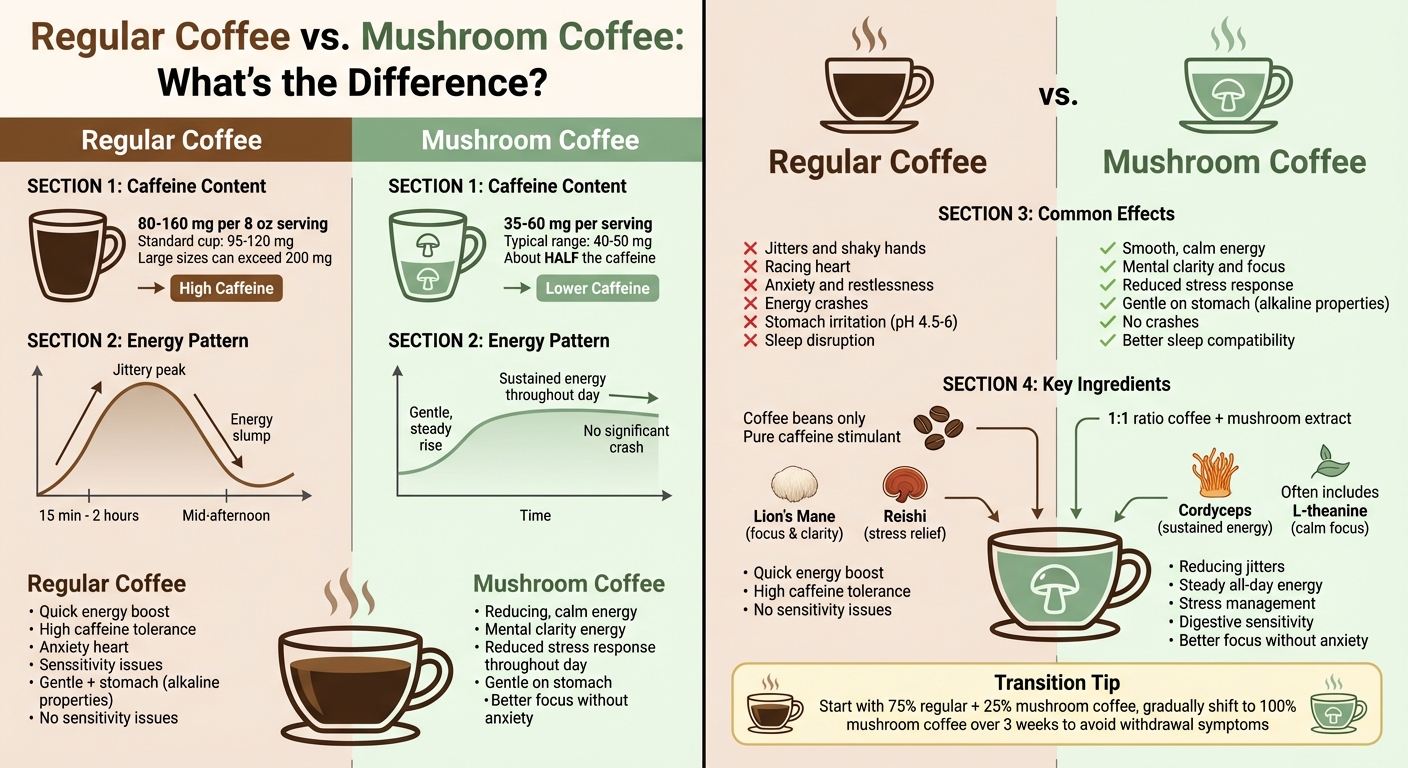
If regular coffee leaves you feeling jittery, stressed, or drained, mushroom coffee might be the solution you’ve been searching for. Combining coffee with functional mushrooms like Lion’s Mane, Reishi, and Cordyceps, this blend delivers smoother energy with less caffeine – about 35–60 mg per serving compared to the 80–160 mg in standard coffee. Mushroom coffee not only reduces overstimulation but also supports focus, calmness, and digestion.
Key takeaways:
- Lower caffeine: Half the caffeine of regular coffee, reducing jitters and crashes.
- Stress support: Mushrooms like Reishi and Lion’s Mane promote relaxation and mental clarity.
- Gentler on the stomach: Alkaline properties and prebiotics improve digestion.
- Sustained energy: Cordyceps supports steady energy without spikes.
Switching to mushroom coffee is simple. Start by gradually mixing it with your regular coffee or swapping one cup at a time. Look for blends with clear labeling, fruiting body extracts, and added ingredients like L-theanine for calm focus. Popular brands like RYZE and Four Sigmatic offer blends tailored to various needs, from focus to stress relief.
Mushroom coffee is gaining popularity for good reason. It provides a balanced, jitter-free energy boost while supporting overall well-being. With consistent use, it could be a game-changer for your daily routine.
Regular Coffee vs Mushroom Coffee: Caffeine Content and Effects Comparison
What Caffeine Jitters Are and Why They Matter
Defining Caffeine Jitters
Caffeine jitters happen when caffeine blocks adenosine receptors in the brain, triggering a fight-or-flight response. This causes adrenaline to surge, leading to physical symptoms like shaky hands, a racing heart, restlessness, nervousness, and even sweating. For many, these symptoms kick in after consuming about 200 mg of caffeine in one go. Unlike regular coffee, mushroom coffee includes adaptogens, which may help reduce this overstimulation.
"Jitters describe the physical and mental symptoms that occur when caffeine overstimulates your nervous system." – Frequent Coffee
What Causes Jitters
The way we consume coffee plays a big role in how jittery we feel. A typical 8-ounce cup of coffee contains between 95 and 120 mg of caffeine, but larger sizes – like those 16- or 20-ounce servings – or high-caffeine blends can easily push you past the 200 mg mark, intensifying the jittery effects.
Drinking coffee on an empty stomach can make things worse. Coffee’s natural acidity (with a pH between 4.5 and 6) can irritate your stomach lining, leading to discomfort like heartburn or nausea. Without food to slow things down, caffeine rushes into your bloodstream quickly, with its effects peaking anywhere from 15 minutes to 2 hours after consumption.
How Jitters Affect Your Day
Caffeine jitters don’t just make you feel physically shaky – they can throw off your entire day. Initially, caffeine boosts alertness, but the overstimulation that follows can scatter your focus, making it harder to stay on task. This jittery phase often leaves you mentally drained and physically tense.
"Caffeine isn’t a true energy source but ‘feels that way because it masks fatigue.’" – Maggie Moon, MS, RD
Once the adrenaline rush wears off, you might find yourself irritable, foggy-headed, and exhausted – symptoms that often hit by mid-afternoon. High caffeine intake can also mess with your sleep, leading to insomnia and creating a vicious cycle where poor sleep drives you to drink even more coffee the next day. For those with conditions like anxiety, GERD, or high blood pressure, these effects can be even more severe. This exhausting cycle makes it clear why exploring alternatives like mushroom coffee could be worth considering.
sbb-itb-777001b
How Mushroom Coffee Reduces Jitters
Less Caffeine Per Serving
Mushroom coffee helps reduce jitters by cutting down on caffeine. Most blends combine ground coffee beans with mushroom extracts in a 1-to-1 ratio, meaning the caffeine content drops significantly. With mushroom powder being caffeine-free, this mix lowers caffeine levels to about 35–50 mg per 8-ounce serving. The result? A smoother energy boost without the adrenaline rush or cortisol spikes that lead to jitters and energy crashes.
However, caffeine levels aren’t always listed on the packaging. If you’re particularly sensitive, it’s a good idea to reach out to the manufacturer for clarification. Beyond reducing caffeine, the mushrooms themselves contribute to a calming effect.
Calming Effects of Medicinal Mushrooms
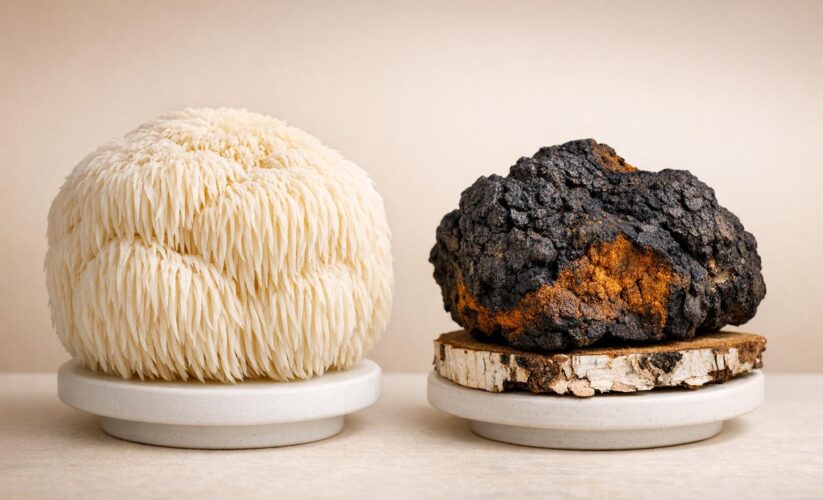
The mushrooms in these blends don’t just dilute caffeine – they actively promote calmness. Take Reishi (Ganoderma lucidum), for example. Known for its stress-relieving properties, it helps your body stay relaxed even when caffeine is in play. Then there’s Lion’s Mane (Hericium erinaceus), which supports mental clarity and focus. It stimulates Nerve Growth Factor (NGF), aiding in neuron repair and reducing brain fog. Unlike regular coffee, which can leave you jittery, Lion’s Mane encourages a balanced, clear-headed state. A 2023 study even found that taking 1.8 grams of Lion’s Mane daily for 28 days significantly lowered stress levels in healthy adults.
"The adaptogens in these mushrooms help smooth out that hormonal spike by reducing the release of excess stress hormones and promoting calm, focused energy instead of frantic alertness." – Artizan Coffee
Cordyceps adds another layer of steady energy by boosting ATP production, the body’s main energy source. This helps improve oxygen use and delivers sustained energy without relying on high doses of stimulants. A 2017 study revealed that taking 4g/day of Cordyceps for three weeks improved VO2max (a measure of aerobic capacity) by 4.8 ml/kg/min, compared to just 0.9 for a placebo group. Together, these adaptogenic mushrooms help regulate stress hormones, preventing the fight-or-flight reaction typical of caffeine.
Easier on Your Stomach and Energy Levels
Mushroom coffee isn’t just easier on your nerves – it’s gentler on your stomach too. Medicinal mushrooms have alkaline properties that help neutralize coffee’s acidity, which usually falls between pH 4.5 and 6. This makes it less likely to cause heartburn or stomach irritation. You can even enjoy it without food, though it’s best to keep added sugar and heavy creams to a minimum, as they can cause inflammation.
On top of that, mushrooms contain prebiotic fibers that nourish gut-friendly bacteria, further supporting digestion. This combination of digestive benefits and lower caffeine content helps maintain steady energy throughout the day, avoiding the dreaded mid-afternoon slump. With consistent daily use, these benefits may become even more noticeable over time.
How to Switch to Mushroom Coffee
Track Your Current Coffee Intake
Before making any changes, take note of all your caffeine sources over a few days. This includes your morning coffee, afternoon sodas, tea, or even chocolate. To give you an idea, an 8-ounce cup of filtered coffee has about 140 mg of caffeine, while instant coffee contains roughly 100 mg. Record each cup, the time you consume it, and any effects you notice, like shaky hands or a mid-afternoon energy slump. This will give you a clear picture of your caffeine intake and help you prepare for potential withdrawal symptoms. Typically, caffeine withdrawal begins 12–24 hours after your last dose, peaks between 20–51 hours, and fades within 2–9 days. With this baseline, you can gradually reduce your coffee consumption instead of quitting abruptly.
Make the Switch Gradually
Quitting caffeine cold turkey often leads to headaches and fatigue. A more manageable method is to reduce your intake slowly. One option is the Percentage Mix Method: in the first week, mix 75% regular coffee with 25% mushroom coffee. In the second week, go 50/50. By the third week, switch to 25% regular coffee and 75% mushroom coffee. Alternatively, try the Cup Swap Method. If you drink three cups daily, replace one with mushroom coffee in the first week, two in the second week, and fully transition by the third week. This gradual approach helps your body adjust, recalibrating your adenosine receptors and reducing withdrawal symptoms. In fact, 86% of people who tapered their caffeine this way reported adapting completely within 5–7 days.
"Your body is literally going through withdrawal symptoms, as if you were coming off of any other substance. Because it affects the central nervous system, you’re going to get shaky, irritable and headachey." – Beth Czerwony, RD, LD, Cleveland Clinic
Once you’ve established a gradual reduction plan, fine-tune your serving size to make the transition smoother.
Adjust Your Serving Size and Timing
Mushroom coffee has less caffeine and a more calming effect, so adjusting your serving size can help you find the right balance of energy and focus. Start with one serving in the morning – about 1 teaspoon or 2–2.5 grams of powder (with around 0.5 grams of extract) – and pair it with a breakfast rich in fiber and protein, like oatmeal or eggs. To protect your sleep, avoid consuming caffeine after 2:00–3:00 PM. If you tolerate this well, you can gradually increase your intake every 2 to 4 weeks until you find what works best for you. Most people find 1–2 cups per day to be ideal.
Consistency is key, so stick to a routine and drink plenty of water throughout the day. Adding a pinch of sea salt or magnesium to your water can help ease headaches during the adjustment period.
Picking the Right Mushroom Coffee
What to Check on Product Labels
When choosing mushroom coffee, the details on the label can tell you a lot about the product’s quality. Start by checking the caffeine content – it should be clearly listed in milligrams. Avoid vague claims like "low caffeine." Most blends designed to reduce jitters fall in the range of 35–50 mg per serving, about half the caffeine of a regular cup of coffee.
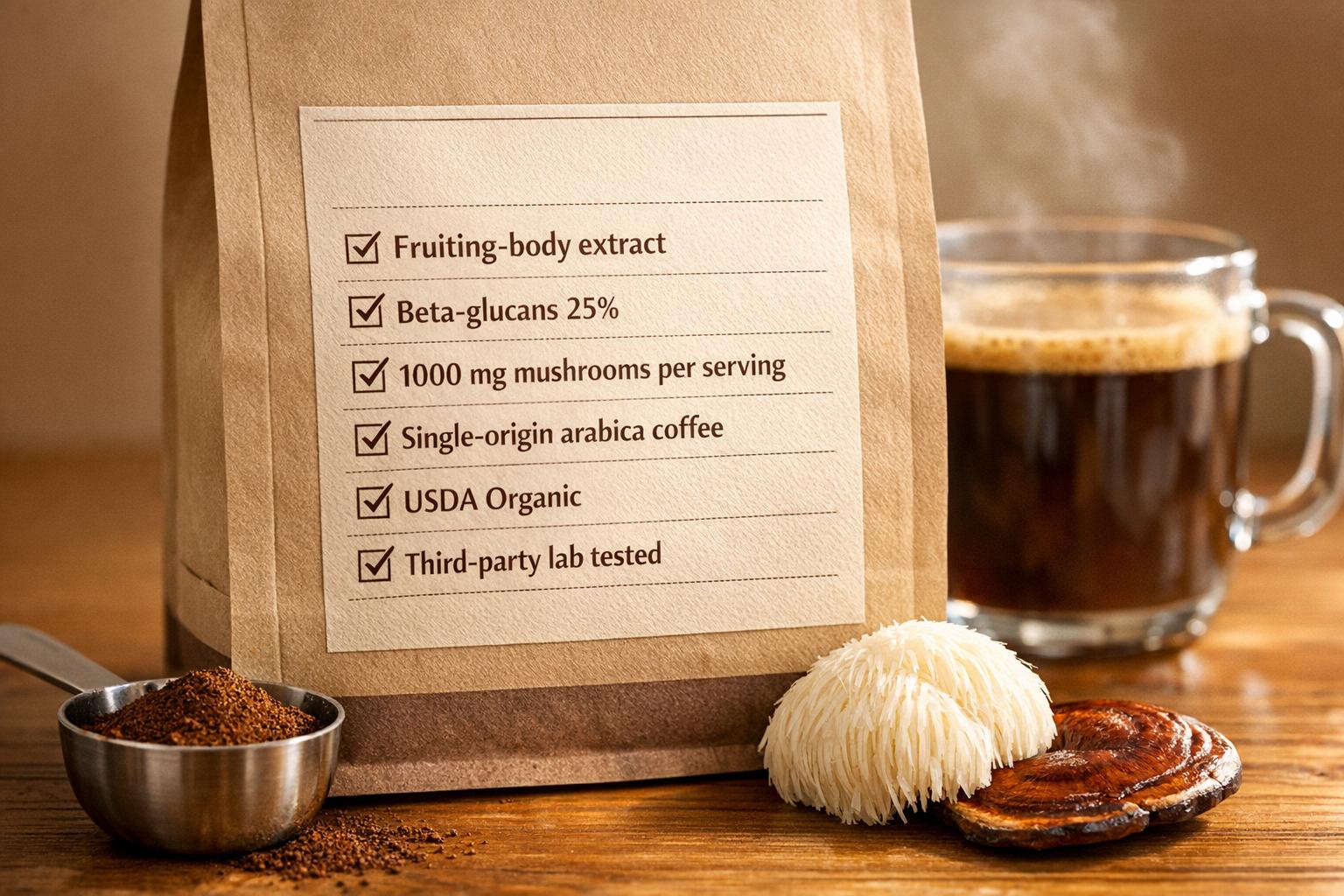
Next, look for the term "fruiting body" instead of "mycelium" or "mycelium on grain." Fruiting bodies are where the beneficial compounds are most concentrated, while mycelium-based products often contain fillers like brown rice.
Make sure the label names the specific mushroom species using their Latin names. For example, Hericium erinaceus (Lion’s Mane) or Ganoderma lucidum (Reishi). Be cautious of "proprietary blends" that don’t disclose exact dosages – this could mean lower concentrations of active ingredients.
For added calmness, check for L-theanine in the blend. This amino acid is known to promote relaxed alertness. A study published in Nutritional Neuroscience in 2008 found that combining caffeine with L-theanine improved focus and attention better than either ingredient alone.
Lastly, look for third-party testing certifications, like a Certificate of Analysis (COA), which ensures the product is free from heavy metals or toxins. This is especially important for blends containing Chaga, as it can absorb harmful substances. Avoid products that list maltodextrin, artificial flavors, or myceliated brown rice as primary ingredients.
By keeping these points in mind, you’ll be better equipped to find a mushroom coffee blend that aligns with your preferences.
Top Mushroom Coffee Brands
Here are some standout brands that meet the quality standards mentioned above:
- RYZE: Features a 6-mushroom blend with 48 mg of caffeine per serving. Priced between $1.00 and $1.20 per cup, it’s highly rated for its balance of flavor and value.
- Four Sigmatic: Known for its Focus blend, which combines Lion’s Mane and Chaga with 50 mg of caffeine. At $1.50 per serving, it’s praised for its authentic coffee taste, earning a 4.7/5 user rating.
- MUD/WTR: Offers a low-caffeine option with just 35 mg per serving. Its cacao and chai base costs about $1.33 per serving, making it a great choice for those transitioning away from traditional coffee.
- Everyday Dose: Combines mushrooms with L-theanine and collagen, delivering 45 mg of caffeine per serving. At $1.50 per serving, it’s rated 9.2/10 as the "most complete stack", offering added benefits for skin and gut health.
- Bloomable: Focused on ADHD support, this blend includes 40 mg of caffeine, L-theanine, and a Reishi-heavy formula. Priced at $1.83 per serving, it boasts a 4.8/5 rating for its transparency and effectiveness.
| Brand | Caffeine Per Serving | Active Ingredients | Cost Per Serving | Best For |
|---|---|---|---|---|
| RYZE | 48 mg | Reishi, Cordyceps, Lion’s Mane | $1.00–$1.20 | Value and smooth daily drinking |
| Four Sigmatic | 50 mg | Lion’s Mane, Chaga (dual-extracted) | $1.50 | Traditional coffee taste & focus |
| Everyday Dose | 45 mg | L-Theanine, Collagen, Lion’s Mane | $1.50 | Calm focus, plus skin & gut health |
| MUD/WTR | 35 mg | Reishi, Cacao, L-Theanine | $1.33 | Quitting coffee/Low caffeine |
| Bloomable | 40 mg | L-Theanine, Reishi, Lion’s Mane | $1.83 | ADHD support & high transparency |
"The caffeine + L-Theanine combination is one of the most well-studied nootropic stacks, and mushroom coffee takes it further by adding neurotrophic (Lion’s Mane) and adaptogenic (Reishi) support."
– Dr. Igor I. Bussel, MD
Matching Products to Your Needs
Once you’ve checked the labels, think about what you want out of your coffee experience. Here’s how to match your goals with the right blend:
- Focus and Mental Clarity: Go for Lion’s Mane-heavy options like Four Sigmatic or RYZE. Lion’s Mane promotes nerve growth factor production, which can enhance clarity without overstimulation.
- Relaxation and Stress Relief: Choose blends with more Reishi, such as MUD/WTR or Bloomable. Reishi can help balance cortisol levels and counteract caffeine’s intensity.
- Energy and Stamina: Look for blends that include Cordyceps. Both RYZE and Four Sigmatic incorporate Cordyceps for a natural energy boost.
- Digestive Comfort: Pick blends featuring Chaga or Turkey Tail. Chaga has anti-inflammatory properties, while Turkey Tail is known for supporting gut health.
- Caffeine Sensitivity: If you’re new to mushroom coffee, start with half servings every other day. This allows your body to adjust to the beta-glucans gradually.
These thoughtful combinations help provide a smoother energy boost, balancing caffeine with calming and adaptogenic properties.
"Expect smooth, steady energy, clearer focus, and a calmer feel, all with significantly less caffeine."
– Natalie Krause, Co-Founder of Bloomable
The mushroom coffee market, valued at $2.3 billion in 2024, is expected to grow to $4.1 billion by 2028. This reflects the increasing demand for alternatives that deliver energy without the jitters.
Steady Energy Coffee with No Jitters | FreshCap Mushroom Coffee

Conclusion
Mushroom coffee offers a fresh way to enjoy an energy boost by combining lower caffeine levels with calming adaptogens. Unlike regular coffee, which can lead to jitters, crashes, and anxiety, mushroom coffee provides a smoother experience. With about 40–50 mg of caffeine per serving – roughly half the amount in standard coffee (95–200 mg) – it delivers a gentler lift without the dreaded mid-afternoon slump. Adaptogens like Reishi and Lion’s Mane help your body handle stress better, while L-theanine promotes a calm, focused state of mind without the physical tension.
Success with mushroom coffee starts with picking the right blend and transitioning gradually. Whether you’re looking for sharper focus (Lion’s Mane), stress relief (Reishi), or long-lasting stamina (Cordyceps), finding a mix tailored to your needs is essential. A good starting point is to try a 50/50 blend or swap out one cup of your usual coffee each day to ease the transition.
"For people who feel jittery, anxious, or crash hard after drinking coffee, these blends offer a way to keep the morning routine without the same stimulant load."
– Bryan Quoc Le, PhD, Founder, Mendocino Food Consulting
This shift in how people approach their morning brew reflects a growing trend toward balanced energy options. As more individuals explore these alternatives, it becomes clear that you don’t have to choose between staying alert and staying calm – you can enjoy both.
Patience is key. While some benefits can be felt within an hour, the full effects often take 2–4 weeks to develop. By committing to a quality blend and giving your body time to adapt, you might find that mushroom coffee doesn’t just replace your regular cup – it becomes an upgrade to your entire routine.
FAQs
Will mushroom coffee still keep me awake?
Mushroom coffee can help you stay awake by providing a more balanced energy boost. It contains less caffeine than regular coffee, but what sets it apart is the addition of adaptogenic mushrooms like Reishi and Lion’s Mane. These mushrooms are known for promoting steady alertness and focus without the usual jitters or energy crash that often follow traditional coffee. This makes it a gentler option for maintaining productivity throughout the day.
Can I drink mushroom coffee if I have anxiety or GERD?
Mushroom coffee is often a better choice for those dealing with anxiety or GERD, thanks to its typically lower caffeine content (around 40-60 mg per cup) and reduced acidity compared to regular coffee. Additionally, medicinal mushrooms like Reishi and Lion’s Mane are believed to have calming properties, which might offer added benefits. That said, everyone’s body reacts differently. Pay attention to how you feel and consult a healthcare provider before making any changes to your diet, especially if you have existing health conditions or take medications.
How do I know a mushroom coffee blend is high quality?
When shopping for blends, prioritize those that include functional mushroom extracts like Lion’s Mane, Reishi, Chaga, or Cordyceps. These mushrooms are often associated with specific health benefits. Look for products that clearly list the types and amounts of extracts used – avoid those that only mention generic flavoring or powders.
To ensure you’re getting a clean and effective product, check for transparent labeling, third-party testing, and the presence of a Certificate of Analysis (COA). These details confirm the product’s purity and potency. Sticking to reputable brands is another way to ensure you’re purchasing something trustworthy.
Related Blog Posts
- 7 Health Benefits of Mushroom Coffee for Daily Wellness
- 10 Best Mushroom Coffee Brands in 2026: Expert Review
- Lion’s Mane vs Chaga: Comparing Mushroom Types
- Mushroom Coffee Checklist: What to Look for When Buying